Completed Entries
Herbal tea popular in Japan made from the seeds of the habuso plant.
Middle Eastern dessert made with ground sesame seeds mixed with nuts and honey or another sweetener.
Vegetables cut in half-moon shapes.
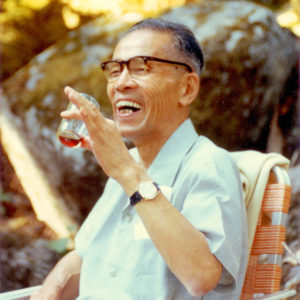
Ohsawa believed that everyone is born happy until he or she becomes out of balance due to poor eating habits or not having enough knowledge of the Order of the Universe to be able to maintain a balanced condition. His advice to overcome this type of unhappiness is to practice a macrobiotic approach to diet and to strengthen one’s comprehension of the natural order of life.
A point two inches below the navel considered to be the contact center between body and soul and used in Japanese medical and martial arts traditions. Concentrating energy on the Hara is thought to be beneficial to one’s health.
A balanced and peaceful wholeness moderating excesses or deficiencies. In macrobiotic thinking, harmony of body, mind, and spirit are essential for joyful living. Selecting foods in harmony with one’s local environment and the seasons helps one reach this joyous state. In other words, a good balance of yin and yang tends to lead one to harmony and peace. Philosophically, understanding conflict and harmony are both antagonistic and complementary to each other can lead to an ability to embrace both.
Transparent noodles made from bean or yam starch.Transparent noodles made from bean or yam starch.
Vegetables cut in diagonal rounds.
A special type of barley that grows in China.
Ohsawa defined seven conditions of real health as: no fatigue, good appetite, deep and good sleep, good memory, good humor, clarity in thinking and doing, and living with a sense of absolute justice. He said the first three conditions are worth five points each. The fourth, fifth, and sixth are worth ten points each. The seventh condition is worth fifty-five points. “In all, there are a total of one hundred points. Those who score more than forty points at first are in relatively good health. Should you total sixty points in three months, it will be a great success for you.” Zen Macrobiotics, 34. (The following conditions are adapted from Zen Macrobiotics, 35-43.)
- No Fatigue: One should not feel fatigued or catch cold. A really healthy person does not shy away from difficulties and is adventurous. Fatigue is the real foundation of all diseases.
- Good Appetite: The ability to eat the simplest food like whole grains and fresh vegetables with pleasure and gratitude, and joyful satisfaction during sexual experiences.
- Deep and Good Sleep: The ability to fall asleep within three or four minutes after lying down, to sleep without dreams or speaking, and to awaken fully energized at a predetermined time.
- Good Memory: The foundation of human behavior; helps one make sound decisions based on remembered experience, especially remembering people who have been kind.
- Good Humor: A person who is cheerful and pleasant under all circumstances, even during difficulties. Such a person distributes deep gratitude and thankfulness to all people, including perceived enemies. The healthy person never gets angry.
- Clarity in Thinking and Doing: The ability to think, judge, and act with promptness and clarity to meet any challenge or necessity. Such a person has the ability to establish order everywhere.
- The Mood of Justice: A full understanding of the Order of the Universe and the intention or goal to grasp the deepest meaning in life. A person who has the mood of justice lives by the biological law: From one grain, ten thousand grains—returning more than received.
Concept from Traditional Chinese Medicine (TCM) that functions like an organ in the body and is linked to the pericardium meridian. It is associated with the Fire element of Five Transformations Theory. The heart governor (more yang) is paired with another TCM concept—the triple warmer (more yin). In macrobiotic usage, the heart governor is referred to as “circulation/sex” as it governs circulation and the vitality of the entire organism. The heart governor can produce heat through the intermediaries of positive emotions such as joy, enthusiasm, and love, thus helping to protect the heart.
Strength or power that comes downward and inward from the heavens (opposite of earth’s force). In macrobiotic understanding, this is a yang, contracting energy.
See Seasonings.
The genetic transmission of diseases from parent to offspring. While a disease may have an hereditary characteristic, the macrobiotic view is to look to one’s internal environment for an underlying cause and remedy.
A dark Japanese seaweed of the brown algae family, rich in calcium and iron. Hijiki grows deep under the sea in darkness and under the heavy pressure of the sea water and thus developing a strong life power.
A hip bath, also known as a sitz bath, is a special bath in which only the hip area is immersed in a tub of water for therapeutic purposes. Daikon hip baths are very popular with macrobiotic practitioners.See Cautionary note.
Arame hip bath: Boiled arame and salt water used as a hip bath for skin diseases, bladder or anal pain, or female disorders. Grated ginger or mustard powder is added for specific disorders.
Daikon hip bath: Boiled dried daikon leaves and salt water used as a hip bath for skin diseases, bladder or anal pain, or female disorders. Grated ginger or mustard powder is added for specific disorders.
Ginger water hip bath: Hot ginger water used as a hip bath for diarrhea or stomachaches.
Mustard powder hip bath: Hot mustard powder used as a hip bath for diarrhea or stomachaches.
Salt water hip bath: Hot salt water used as a hip bath for female disorders.
Type of winter squash that has the highest sugar content. Although the Japanese named this squash after Japan’s most northern island, it originated in the United States. It is also known as Hokkaido pumpkin and kabocha squash.
The instinctive ability of one’s body to control internal conditions, keep them constant, and maintain balance with the external environment. Examples of homeostasis include body temperature, pH level, oxygen and carbon dioxide levels, blood circulation, and blood sugar level. “By eating whole foods, we will be able to maintain homeostasis and a good balance of nutrition in our blood, body fluid, and cells.” Macrobiotics: An Invitation to Health and Happiness, 41.
A group of organs and glands producing hormones, chemical messengers that coordinate metabolism, growth, reproduction, stress response, and mood regulation. The major components are the pituitary, thyroid, adrenal, and pineal glands, and the pancreas, ovaries, and testes. The hormonal system maintains homeostasis in the body.
To be humble, having a modest view of one’s importance, is to be free from arrogance. Ohsawa felt changing arrogance into humility to be one of the most difficult things to do. “The man of humility, he who has no fear of being last…knows a contentment that is the essence of happiness.” Zen Macrobiotics, 9.
Projected Entries
Haiku
Hair falling out
Handwriting
Hatcho miso
Head colds
Headache
Heart
Heart disease
Heart Sutra
Hemoglobin
Hemophilia
Hemorrhage, cerebral
Hemorrhoids (piles)
Herb teas
Hernia
Herpes
High blood pressure
Hip bath
History
Honey
Human beings
Honey
Humor
Hummus
Hunger
Hydrochloric acid
Hyperinsulinism
Hyperlipidemia
Hypertension
Hypoglycemia
Questions or Comments?
Support the Dictionary

Check Out Our Sponsors


Read George Ohsawa